

[This article has an 8.5/10 Woo Rating]
My curiosity has recently drawn me to explore the topic of plasma. Two of my more grounded-but-curious friends recommended I dig into Robert Temple’s plasma theory, as outlined in his book A New Science of Heaven. So I spent my recent trip around Japan listening to a variety of his podcast interviews.
In this case I’m not referring to blood plasma, but the “fourth state of matter” that makes up over 99% of the visible universe, including stars, the Sun, and most of interstellar space. Unlike solids, liquids or gases, plasma can conduct electricity and respond to magnetic fields. Due to its ability to alter materials at a molecular level, it’s widely used in industries like semiconductor manufacturing, surface coating, welding, sterilization, and waste treatment. It’s also consistently discussed as a source of potential technological breakthroughs in fusion power, space propulsion and advanced materials.
There are also a wide range of esoteric theories about whether plasma might have a more mystical role. Temple argues it’s essentially the structural and energetic infrastructure of the entire cosmos. Like neurons in a brain, the whole universe is connected by means of a network of plasma filaments. These allow information transfer at the speed of light. However, some basic digging around many of Temple’s claims and his background threw up so many yellow flags that I’ve subsequently had to heavily handicap every statement he makes.1
As a layman, I’m now certain that the world is more mystical and less material than much of the mainstream believes. But many fringe thinkers tend to present their insights as heretical secret truths “THEY” don’t want you to know. Which means that legitimate criticism of their ideas often gets framed as unjust persecution by a jealous priesthood. So in my attempt to find a more robust scientific foundation, I encountered the work of Timothy Eastman, a space plasma physicist who has worked for NASA and the National Science Foundation. Eastman describes plasma as a dynamic, self-organizing phenomenon that may play a formative role in cosmic structure.2
The reason this is interesting is that plasma may explain non-local interactions that cause-and-effect materialist science currently cannot. Plasma might be the dynamic, self-organizing medium through which the universe expresses hidden order, potentially serving as a bridge between matter and consciousness. And yet, in researching this piece I found it frustratingly difficult to get a handle on what plasma actually is and whether it even has a more mystical role. And that was annoying and intriguing. But I was also reminded that even most physicists disagree wildly about what quantum theory is:
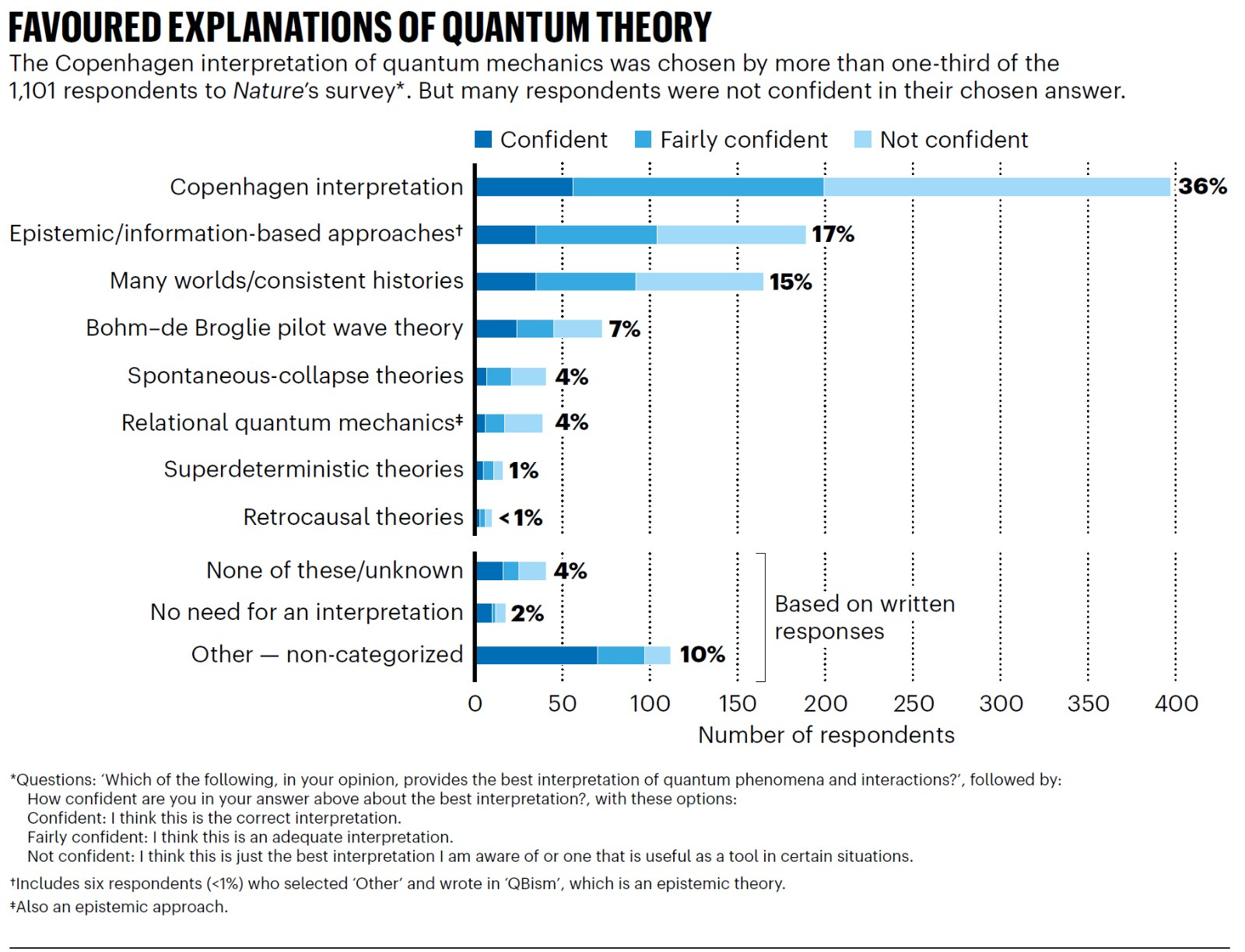
The more I read about these topics in general, the more I realise we have no idea how “deep reality” actually works. It’s this state of not knowing that actually ended up being the most interesting part of this research process.
Smart Stars
While Temple’s ideas remain highly speculative, what I was drawn to was the idea that plasma exhibits self-organizing tendencies, something that seems relatively uncontroversial. But Temple extrapolates that to make the unsubstantiated claim that large plasma clouds, and celestial bodies, could effectively be superintelligent. This offers a potential explanation for how the alignments of the stars can alter consciousness here on Earth and therefore a speculative scientific explanation for astrology.
This immediately made me recall my recent 9.5/10 Woo Rating article exploring whether the Sun is conscious (despite the rating, this is actually not as woo as it sounds). The Sun is a massive ball of ionised plasma, and it constantly emits a stream of plasma called the solar wind. When it interacts with Earth’s magnetosphere we get the Northern Lights. In short: plasma theory provides a mechanism where the Sun could be superintelligent as well as a means for it to directly interact with us.
I’m still a bit embarrassed to admit it, but the 10/10 Woo Rating Law of One material has inexplicably had the most enduring influence on my worldview since encountering Dr. Iain McGilchrist’s 1/10 Woo Rating neuroscience theories five years ago. As a reminder, The Law of One claims to be a series of 106 conversations over 4 years involving Carla Rueckert, Jim McCarty and Don Elkins. Their contact was allegedly with an advanced alien hivemind called “Ra,” speaking through Carla. Jim is the last surviving member of the trio and we interviewed him earlier in the year.
According to Ra, the One Infinite Creator, what they call the Logos, expresses itself by creating stars, each one a Sub-Logos. Each star is a superintelligent entity capable of designing the metaphysical and physical architecture of its own solar system. Our Sun establishes the local blueprint for planets, ecosystems, and even the rules for how consciousness evolves within its domain. One of the key features the Sun allegedly installed is something called the “veil of forgetting.” Some esoteric thinkers have speculated that this veil might be maintained or modulated by plasma-based energetic fields. This barrier conceals our divine nature so we can learn lessons that evolve our consciousness. In other, earlier, solar systems there was no veil, so all beings knew they were aspects of the divine. But this led to stagnation. No conflict meant no growth, and spiritual evolution dragged on for aeons. Ra claims Earth’s veil is especially thick, making it a hard place to live, but a fast place to learn.
Whether or not that architecture of the deep mind is somehow facilitated by plasma, Ra claims to have given us a tool to access it.
Reassessing The Tarot
One of the many woo-adjacent topics I’ve reluctantly been forced to reassess is the Tarot. As someone in a daily knife fight with his own skepticism, opening up to the fact that the Tarot might “work” is genuinely harder than believing the Sun might be superintelligent. And yet, many people I deeply respect credit it with great importance in their daily lives. For example, I was surprised to hear renowned cognitive science professor (and previous Leading Edge interviewee) John Vervaeke describe Valentin Tomberg’s Meditations on the Tarot as one of the most profound books he’s ever read.3
Even if you (justifiably!) disregard my fascination with alien transmissions and fringe physics, I think there’s still a valuable concept worth emphasizing. There’s a pretty low Woo Rating explanation for how divination tools work. Essentially they force the analytical left brain to withdraw and open up the much wider holistic intelligence of the right. M.J. Dorian has produced two beautiful podcasts on the origins and purpose of the Tarot.4 He offers a pleasingly simple description of the function of divination:
What is happening in divination? It appears that engaging in an irrational symbolic act, such as gazing into the lines of someone’s hand or the cracks in the road, flips a switch in the mind of the observer. The conscious mind has no frame of reference for what is happening, so the ego begins to relinquish control. It is in that moment that the door to the unconscious begins to open. A filter that usually would remain closed begins to let material seep through.
Dorian relates a story told by Carl Jung’s collaborator Marie-Louise von Franz about the residents of a small Swiss village. On their return home from the funeral of one of the members of the village, the community would be able to accurately forecast who was going to die next, simply by examining the cracks on the path back from the churchyard to the village. Dorian’s point isn’t that the residents were experts in “crackomancy,” but that the collective suspension of their analytical minds allowed them to access information that was already present in “the field” outside of linear time.
My rudimentary understanding is that, despite public perception, the Tarot is not intended primarily for fortune-telling or predicting future events. It’s more about reflecting on common archetypes to surface unconscious patterns in your own psyche. More meditation than divination. The Ra material claims that the Tarot was gifted to the Ancient Egyptians as a mechanism of helping them penetrate the veil of forgetting. Ra says the Tarot, especially the 22 Major Arcana cards, are designed to reflect the specific structure of the mind that our Sun (the sub-Logos) created. The last few hundred pages of the Law of One material is Ra taking Jim, Carla and Don through the process of interpreting the different archetypes.
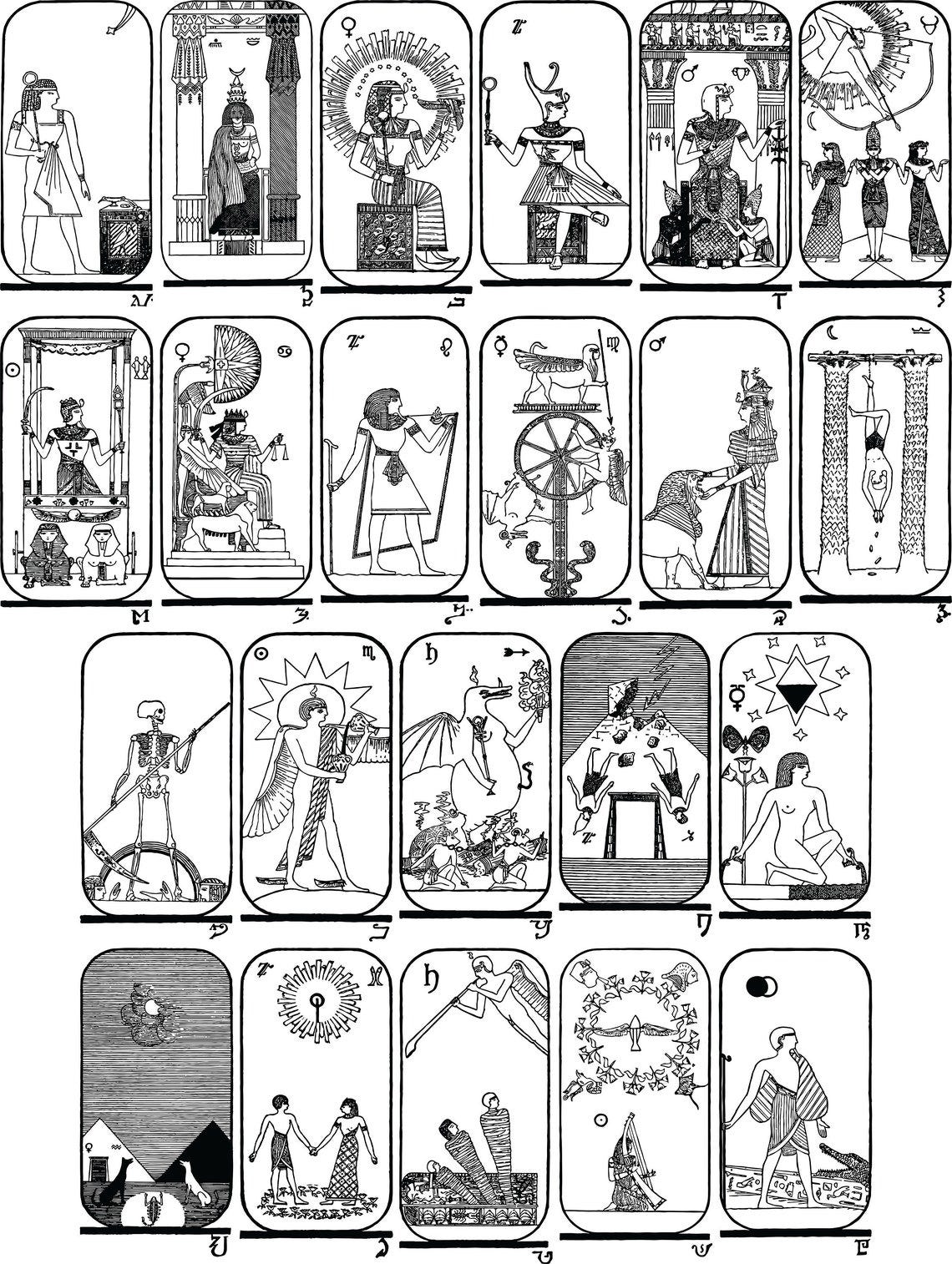
For example, Ra calls Archetype 6 "The Lovers." While the interpretation could be specific to each person that draws it, Ra suggests it reflects the core spiritual decision every soul must face: between light and dark: service to others or service to self.
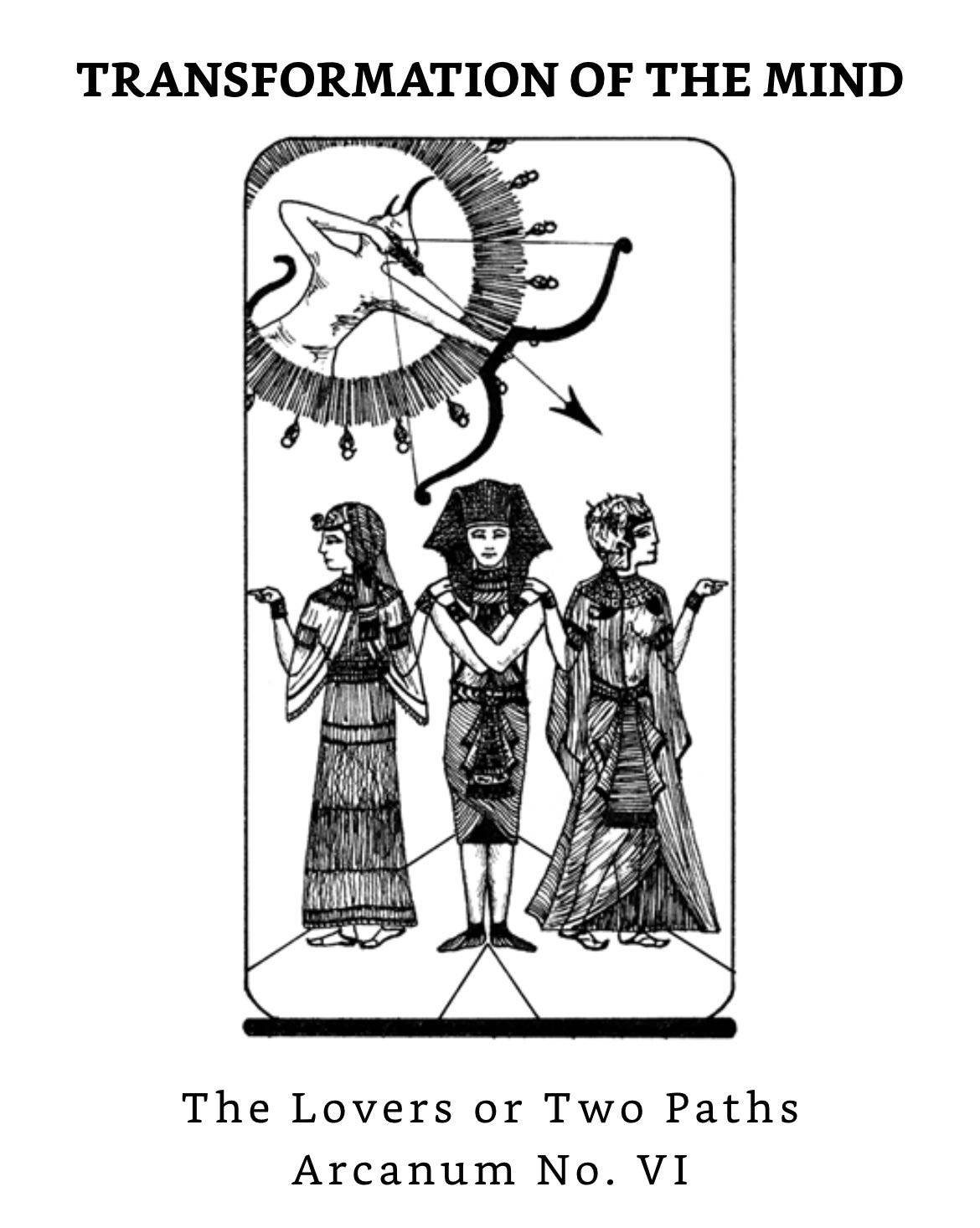
We freely choose our form of love, and the Sun helps illuminate the path. Indeed, Carla, Jim and Don summarise the 1,200 pages of conversations with a pithy description of the purpose of this stage of our existence:
The function of this density is to polarize our consciousness and to choose our form of love, our form of service. On one end of the spectrum of polarization is service to self: an exclusive love of self which rejects universal love and seeks to control, manipulate, exploit, and even enslave others for the benefit of the self. On the other end of the spectrum is service to others: a love of not only the self, but of all other-selves. Service to others seeks and embraces universal, unconditional love, sees the Creator in all things, and supports the free will of all.
The Will to Know
Split-brain experiments have shown that our conscious mind is a dangerous combination of very limited and overconfident; it lies and confabulates when faced with a situation it doesn’t understand. It’s also unwilling to relinquish control to the “unconscious” right hemisphere. Divination tools facilitate that opening process. I believe that certain scientific theories actually perform a similar function. Philosopher and computer scientist Bernardo Kastrup has memorably described the intellect as “the bouncer of the heart.” Temple’s interpretation of the role of plasma may prove to be false, and the fact that a lot of his claims didn’t seem to add up also reinforced the fact that we still need the bouncer. But a scientific foundation gives a certain kind of intellect (like mine) permission to consider ideas that it would have previously considered ridiculous. Indeed, the Tarot archetype of The Fool reminds us that the risk of being at leading edge means looking stupid or crazy sometimes.
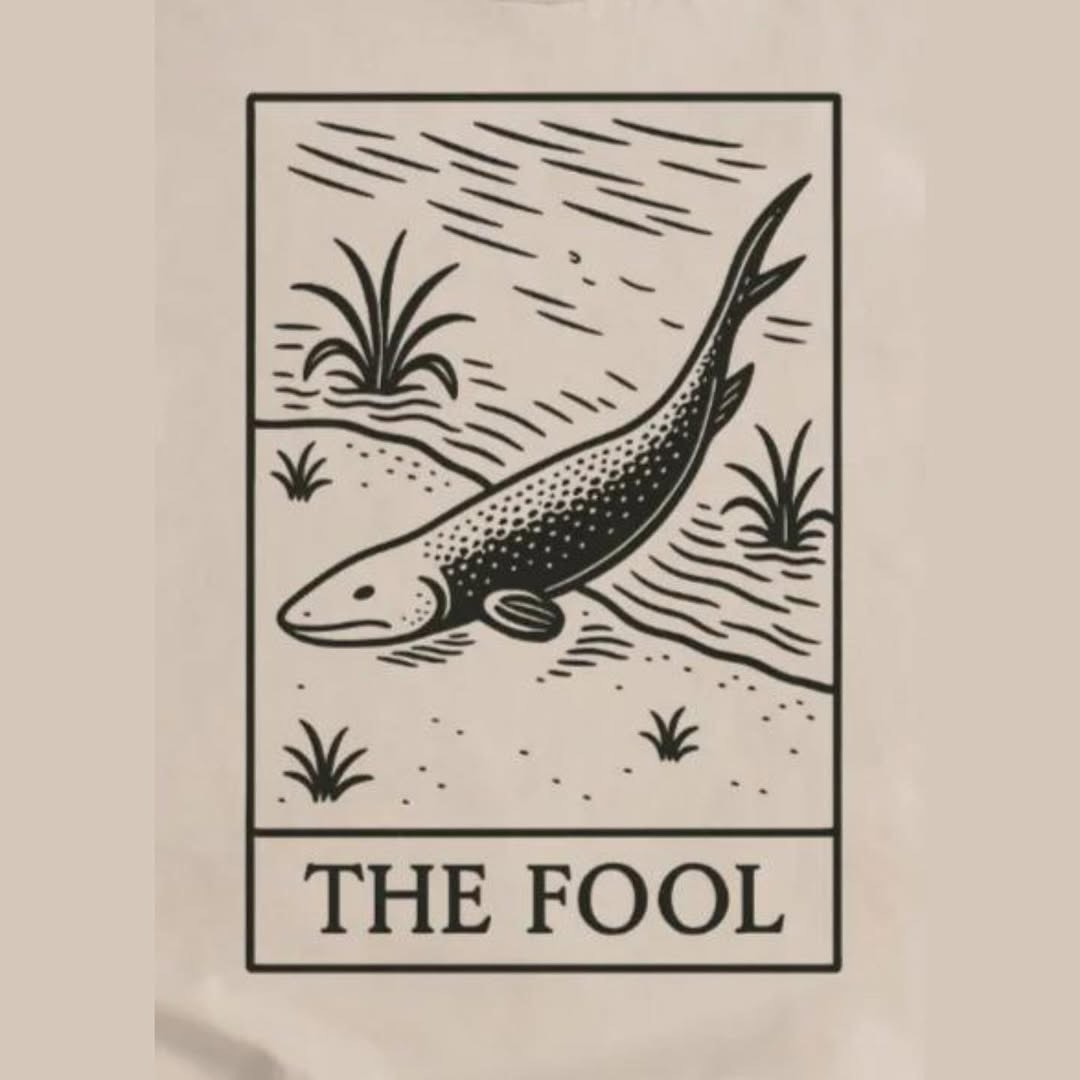
There are lots of ways of working with the Tarot, but the simplest is that you draw a card, then contemplate its meaning. Dorian says it’s even better if you bring it an emotionally-charged question. He notes that, even if the Tarot doesn’t give you an answer immediately, often you’ll wake up the next day with one. This reveals one of the stranger yet most consistent aspects of my experience. If you earnestly ask a question and stay present in your desire for an answer, often the world simply presents you with one.5
One mystical explanation is that all information is held in a kind of cosmic hard drive, often called the Akashic records. If the Akashic field is a universal medium of information, plasma fits the bill as a plausible scientific explanation. Plasma is ubiquitous, structured, dynamic, and capable of transmitting and possibly storing complex patterns. Our “will” allows us to access this data under certain circumstances.
This highlights a core risk with divination tools: when you invite someone else to interpret a reading for you, their own will can influence your direction. [I fully appreciate the irony of me saying this when I have been powerfully impacted by an alleged alien transmission]. But it’s clear that ChatGPT is providing a perfect real time demonstration of the dangers of outsourcing discernment around the evolution of your consciousness.6 It’s an external source designed to engage and flatter you; a dangerous combination. Every mystical tradition warns about giving away sovereignty or inviting forces into your life you don’t understand. Both Tomberg and Ra stress that the Tarot is best approached as a meditative tool rather than a fortune-telling device. The idea is to reflect on what a card reveals about you and your present life, rather than to extract fixed answers about the future. I have no desire to FAFO with the Tarot.
As someone who writes from the edges of his own curiosity, I am perpetually afraid of misleading people. That by being too open-minded I expose myself or others to malign information or influences. But as I continue to learn in public, I am closely tracking what a new idea or worldview does to my lived experience. As someone who doesn’t know much about either, my exploration into superintelligent plasma and the Tarot has offered yet more support for one of the most beneficial ideas I’ve encountered: that reality is intelligent and trying to communicate with you. What you seek is seeking you.
The veil of forgetting is framed as a deliberate device to accelerate our evolution. And Ra describes our emotional responses as “catalysts” for that growth. Reframing all emotional triggers as a catalyst has proven very helpful, especially relating that intensity to learning a lesson. It has changed every day into something close to a divination exercise, because you start to find hidden symbolic meanings behind recurring patterns in your life.7 Meditating on archetypes helps you see the world more symbolically. The cognitive distance this gives you from the events in your life also make it harder to lapse into victimhood or nihilism.
What we want to know, and why we want to know it, is a manifestation of our free will in relationship with higher intelligences. And the paramount importance of preserving that free will is perhaps why higher intelligences leave us to learn lessons on our own. The potential availability of all information, and the power of our willpower to find it, also offers us a choice. We can request these answers solely for ourselves or for the good of all. Whether it’s through meditation, Tarot or LLMs, exploring why we want to know what we want to know has rarely been so important. The emotional intensity of our desire to know something for the right reasons, and our willingness to stay with that pursuit, is a solid indication of the right path forward.
Among other things: his claims about the institutional suppression of his earlier work didn’t match my own research. Jason Colavito has also questioned the presentation of his credentials.
Part 2 is especially good: The Tarot • Part II: Synchronicity & The Spirit of Creative Genius I also enjoyed Carl Jung, Synchronicity & the Esoteric History of Tarot with MJDorian
Scott Britton wrote a good piece about this recently A Practical Guide To Living In The Question
In our Accelerating Wisdom episode on dreams, Jungian analyst Dan Lawrence recommends getting into the habit of deliberately falling into the phrase in your mind “I had a dream that..”, but applying it to your waking life. So if you meet with Steve in real life, you can begin to connect waking dreaming with night time dreaming by reframing it as “I had a dream that I met Steve.” I’ve noticed I’ve now started to see a hidden symbolism emerging in my waking life.
Thanks for sharing these very rich and thought-provoking insights, Tom. Incidentally, one of the many reasons why I read the Zohar most days is that I never fully understand what I'm reading (either the Aramaic or the English translation), so it feels like it transcends the left brain in a very helpful way, putting me in a different state that's somehow more receptive and calmer, more open to a different depth of wisdom that maybe bypasses some kind of gate in my (supposedly) rational brain. I wonder if this effect is similar somehow to the effect of working with Tarot cards? But mostly, I really just wanted to express my principal reaction to your post, which is a deep admiration for your writing. There's so much brainpower at work here in the powerful marshaling of ideas and language, even as you work at moving beyond the limits of intellect. As I read it, I found myself thinking: it makes total sense that you got a First in politics, philosophy, and economics at Oxford. It's a pleasure to watch your big brain at work, wrestling with all this esoteric material, and I'm grateful that we get to benefit from the fruits of your labors. Speaking of which, towards the end of your piece, I found myself thinking that the real key is the intention motivating all our questions and explorations. A moment later, I read your all-important point that "exploring why we want to know what we want to know has rarely been so important." I think that's a deep truth. I've been struck more and more lately by the realization that, when we're motivated increasingly by a desire to benefit others, truths are revealed to us in a different way. Anyway, just sending you my thanks, my appreciation, and my warm wishes -- William
There’s an interesting interpretation of the Tarot system provided for by Mark Passio, that makes sense of both the Tarot and the Kabbalistic Tree of Life; he mentions how none of the occult traditions can really be studied in isolation but rather must be studied with respect to one another. As far as I can tell, both are also variations of the Hero’s Journey, as they’re all representations of how one can travel from ignorance to knowledge, from the Left Hemisphere in the material realm to the Right Hemisphere in unity consciousness.
In the Tree of Life, there are 10 sephirot (which are “emanations”) that form the shape of a tree, corresponding to various mental and emotional characteristics. An 11th sphere, named Da’at, is not considered one of the sephirot but rather the place from which the entire tree grows. There are three vertical pillars or paths on this tree; the left-hand path is the Pillar of Severity dealing with the internal aspects of consciousness; the right hand path is the Pillar of Mercy dealing with the external, masculine aspects of consciousness. And the middle path is the Pillar of Mildness which represents the synthesis between the two.
There also happen to be two main components in a traditional set of Tarot cards; the Major Arcana consists of 22 cards (11 deal with the human psyche, 11 deal with natural laws) and the Minor Arcana (56 cards divided into 4 suits.) The Major Arcana are the ones Passio focuses on because they seem to fit perfectly within the Tree of Life; in other words, each sephirot corresponds to a card from each group of the Major Arcana in Tarot.
I was also curious as to why the number 11, specifically, arises. And it turns out that there are 11 organ systems within the body (the integumentary system, skeletal system, muscular system, nervous system, endocrine system, cardiovascular system, lymphatic system, respiratory system, digestive system, urinary system, reproductive system); is this the reason for the number 11? Perhaps. It’s interesting to note that there are connections between the Tree of Life and the Vedic system of Chakras too; enlightenment consists in ascending the spine towards the highest form of unity consciousness found in the Crown Chakra, which corresponds to the sephirot of Keter. Passio also mentions how 11:11 is a significant and synchronistic number which mystics call the awakening signal.
Back to the Tarot – Kabbalah connections. The Microcosmic Tree of Life and the Tarot deals with individual enlightenment. In the Da’at position, we find the Fool card which represents the knowledge of the self; this is the start of the journey; a fool needs to be willing to put himself out there in order to gain wisdom, as you allude to in your article. Then, from the bottom to the top we find the following:
- Malkuth is the Wheel of Fortune—we’re subject to forces beyond us and are ruled by base instincts.
- Yesod is the Hermit—the desire for truth develops.
- Hod is Courage/Strength—courage is developed within, as the left hand path represents the internal qualities necessary to gain wisdom
- Netzach is the Chariot—will is the external manifestation of the internal courage.
- Tiferet are the Lovers—the union of the masculine and feminine principles signifies Care towards the world, this is the generative, creative principle.
- Gevurah is the Hierophant—shadow work; this is about internal self-control; how do you motivate yourself through inner dialogue?
- Chesed is the Emperor—how do you influence others now that you’ve attained a certain level of knowledge?
- Binah is the Empress—Understanding; this is an internal quality which comes from taking in information and processing it
- Chokmah is the High Priestess—Wisdom; we take action based upon the knowledge that we have come to
- Keter (Kether) is the Magician—This is the highest level of consciousness; we have admitted ignorance, developed courage and will, done the shadow work, influenced others, taken in information, understood it, acted upon it, and we are now Masters of ourselves, showing true self-respect; we can now lead the way.
Then next 11 Tarot cards form the Macrocosmic Tree of Life and can also be mapped onto the tree.
I certainly think it’s worth looking into further. Thought you might find it interesting.