

Dan Lawrence is a former futures trader turned Jungian analyst and writer. This is the remarkable story of his silent childhood, precognitive dreams, work in high-security psychiatric units and a near-death experience in a Malaysian ICU.
Dan delivered a pretty mindblowing lecture about dreams for Leading Edge’s Accelerating Wisdom Series. He’s someone who has let his curiosity guide him from a very young age. It took him through a traditionally successful path into a world filled with mystery and intuition. Obviously he would never say this, but listening to him speak, particularly towards the end of his story, I was really struck by the fact that this is what a successfully integrated life looks like. He seems to have balanced spiritual and material, intuitive and intellectual and masculine and feminine, all while building a successful career and life for himself and his family. In a world desperately short of role models, I think his is a fine example.
I loved his story so much that I decided to release it as a standalone interview and transcript. [You can listen to our conversation on Spotify or Apple Podcasts, and I’d recommend it on 1x for the full effect of Dan’s voice and presence].
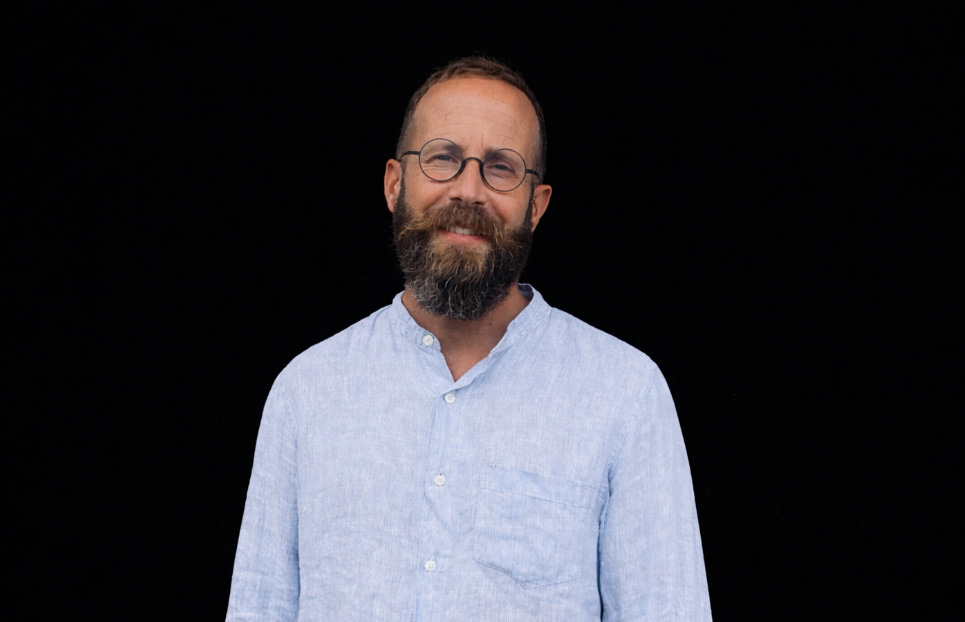
Dan Lawrence: I didn’t speak to anyone outside of my home until I was five. Funnily, with me doing the work I’m doing at the moment, what it meant is I fine-tuned — or I was drawn into what you’re calling “down” — I was just fascinated by the connectedness of things.
The weirdness — Wyrd — of things, almost frozen in that. I had a lot of fear in me as a young boy. It seemed intuitive to me not to speak, because by the time something arrived as language — as a word — I was already some way removed from where it had come from, and I was absolutely fascinated by that. So when people around me spoke, I wasn’t much interested in what they were saying. I was just curious — deeply curious — about where it was coming from, and whether they knew. I know this sounds a bit anachronistic, but it’s the best way I can explain it.
How did I do that? I had no guidance. My parents were completely irreligious. My dad’s mother was Catholic and he’d rejected that. So I just developed these little idiosyncratic practices where I would sit on the edge of my bed and basically do Zen. I would even describe it to myself as having to take layers away from my mind.
I had to go back in my mind. I would sit there and enter into darker and darker iterations of mind until I was in complete blackness. Of course I was a little boy, so I was completely ill-prepared for that — often in states of quite severe dread. I’m aware of what a psychoanalyst would make of that, but I know: the initial impulse came from curiosity, not from fear. I arrived in a place of fear once I was there.
And yet what I found there, in that complete nothingness, was that I had a kind of mobility. I had a slipperiness. I would sense presences around me that were felt, for want of a better word, evil or demonic. But if I stayed very still, I could move around that space, and I would have all these experiences of faces appearing in front of me. If I engaged with them — with their eyes — I’d have some kind of energetic exchange. If I moved them to the side in my mind, another one would take its place. So I would sit there with this stream of faces and became quite adept at it in my silence.
TM: Were those faces mostly evil, or were they a mix?
No, just people. Just people.
TM: And what did you think they were at the time?
I thought they were dead people. I still probably do. I’m describing a process that happened in my mind’s eye. If they appeared in my mind’s eye and I looked into their eyes deliberately, there would be some kind of exchange — they would engage me in conversation. There were some repetitive ones, but they were just normal people. And then there were these more nameless presences in the background that, every now and again, if I went deeper, I would become aware of — just dark — and I needed to stay very still and move myself back out.
So I spent a lot of my early life, until I was about five, in this state. My parents were very worried about me. Luckily it was long before the over-fascination with neurodiversity. I wasn’t put in front of anyone. I wasn’t diagnosed.
I spoke indoors sometimes. Someone had given me an illustrated Bible, so I asked to go to Sunday school. They would take me on Sunday mornings, and I became fascinated by the archetypal stories there — in particular, Daniel in the lion’s den, because that mirrored my situation very well. And Samson — I was fascinated by the story of Samson and this power that resided in him that no one could work out.
I would oscillate between a state of real fear and dread, and yet was also happiest and most content in silence, in darkness. I couldn’t understand why other people wouldn’t do that. I couldn’t understand why everybody wanted to talk so much.
I spent a lot of time with my mother because I was at home. I went to preschool, but after a year or so they didn’t know what to do with me because I wouldn’t talk and would not engage with anyone. So mum withdrew me from that. But I was fascinated by this: she would call me Danny, and I would immediately be prompted to wonder where this notion of Danny came from in her — match it against my interior feeling. I had this insight I couldn’t quite put words to: her Danny had to be something to do with what she called thinking and language. And it wasn’t quite right. The pre-Danny was back there somewhere. So how could she know that?
I would spend hours in this state, reading the Bible and drawing. I would draw repeatedly — figures that I encountered in my practice, faces.
And once, at about five, I did this huge drawing of what I later came to connect with the figure Baal — the pre-Canaanite deity — because I’d encountered that. I drew it out to show my parents. Of course, they just looked at it, thinking, what is he doing? I’ve always been very artistic.
TM: To jump in there — I was obsessed with Moloch, which is right, the same figure, and I felt I had an archetypal confrontation with Moloch during my most insane moments, as the god of zero-sum games. It felt very real to me, in a world where those things weren’t considered real. My God, it’s interesting you picked that example. Carry on.
It’s a very present example to me. And then I started school, and of course in a school structure — it’s quite an anxious environment — they’re managing kids and trying to reach milestones, even in those days.
I just wouldn’t speak. I didn’t feel the need to. I was quite happy, content in the classroom. But there was one day when I finished school, looked up, and my mother was talking to my teacher. I could see how worried they were — I could see how deeply worried my mum was, in a panic really about what to do. And then I thought, I better start talking. I began to form words and talk. Very quickly it became clear it was a selective mechanism, not a speech delay. From that time onwards, I felt it was my task to pick up the thread of worldliness.
I quite quickly found that I enjoyed using words. I was a bright kid.
I was in a small primary school. I was very bright — years ahead, very quickly. Because I loved drawing, I would do my work in the first two hours of the day, and then they would give me things to draw and I would go off around the school or the grounds and draw and draw and draw.
From then onwards, all the way through childhood — I went to grammar school — I picked up the thread. I had this latent ability to form words, to speak, to write. I loved English. I became very welded to that. That was the backdrop. My parents had lived their whole life in the same area. They were just outside London. My dad was in print. My mother was in finance. In the area I grew up in, you go into finance, you make good, you follow a particular linear route. I was very good at maths. I took my maths GCSE three years early.
TM: Wow.
Did A-level when other kids were doing other things.
So it was like the flip — the breaking in came once I’d made it into the world successfully. I was a futures trader. I’d done my pit exam, so I was a trader and broker. I was on the phones in the pit — a dual role. And at that point, I fulfilled what I think really were my parents’ wishes and this deep sense of fitting in — because my parents carried that anxiety all the way through my childhood, that I was going to revert back to something.
I was still a strange enough child. I still spent a lot of time on my own.
I was allergic to dogs and all my family had dogs, so whenever we went to visit anyone I would be outside on my own, and everyone would come out to check on me. I’d be like, no, fine — reading, or just having an opportunity to be in my own company, back in that state of when I was younger. State of reverie. As I got older, I performed a language around it. Again, this underlying connectivity — I love that word “weird,” Wyrd, because there’s something slippery about it that really resonates with me.
When I was on the trading floor and working, I started to reconnect with aspects of my old life. I started to read Freud and Jung. My grandfather died — he was very important to me, stimulated something in me — and then suddenly, once I’d opened that door just slightly, I couldn’t close it. Things started to — whichever way you put it — either unravel or reawaken, whatever language you want for that.
And it felt like a relief. It felt like I was coming home to myself. I suddenly had this realization of the amount of effort I’d put in between five and twenty-five — however old I was — to get where I was, and how far I’d gone away from myself. The distance and the pain in that distance. And the more successful I was in that trading floor environment, the more extroverted I was, the more “successful” — the more the loss of that little boy and his innate way of being in the world felt intolerable.
TM: At that stage, did you get to a breaking point of stuckness? Or was this something where you adapted quite quickly back into following the flow?
Let me think about the chronology of it.
It really accelerated when the trading floor closed and I was an earlier adopter of screen-based trading, because I could just see that’s the way it was going. And bear in mind, on the trading floor I’d been part of a small group where we would share dreams. It kind of began to encroach even in that very extroverted, very left-brain environment.
I was part of a small group of eight guys who would meet up every morning before the open and share dreams over breakfast — as a form of technology, a kind of co-opted left-brain version of something, as an edge on the market.
TM: So you were using your dreams to enhance your pattern recognition?
Yes. And so everybody had access to all the screens, but I had access to this feeling-based intuition that would appear in images. If I dreamt of something and someone else dreamt of something similar, or our dreams crisscrossed, there was a point of real confirmation that we had access to something. So on a Friday morning, three out of eight of us dream of a symbol that connects, and we explore that symbol using basic symbol diaries, trying to connect it. And it’s a Nonfarm day on a Friday. Everything points towards a bull market, and we are taking a bearish position. We’re not necessarily taking a position over the figure, but we are ready to go — as soon as there’s any sign of something, we’re in and going.
It wasn’t quite as formulated as that, but that was in the last two years that I was on the floor. I was trading at that point, broking on screen for people because screen-based trading started about two years before the floor closed. After hours we would do screen-based, and I was one of the first people to broke that, because I could just see where it was going.
TM: Why — why could you see where it was going?
It just felt inevitable.
You’re asking about intuition. I think it was pattern recognition. Well, it is a very good question, because all the signs were there — the tone coming out of the trading floor, announcements and news, and the ambivalent excitement that came with people being able to trade on screen.
But I think it was me reading the field of the floor.
Most people — the floor had been open twenty-odd years. People spent their whole career down there, very social. You didn’t have to trade particularly well. The actual floor environment of a stock market is about relationship — it’s not about foresight. So people are very beholden to that as a model. And yet I could feel in the field a draw towards screen-based trading and a sense of excitement. After hours I would sit with a screen on the floor, trading Japanese bonds and stuff, broking them for people. Very quickly there were people gathered around me, and I could just get a sense of where this was going.
I jumped in with a bunch of other traders. I was by far the smallest trader. We took a floor of the ING building in King William Street before the floor closed, in order to get set up with screens and early trading technologies, score boxes, all sorts. We all had our own zone in that big office space. We took a three-year lease between us. But within the first year, everybody disappeared except for me, because people just weren’t truly ready for it. They were used to trading relationships. And yet suddenly your position is transparent. Someone won’t do you a favour to get you out of it. You’re outside — you’re engaging with a machine.
But that’s when, thinking about it, this is interesting to open up: how did I trade?
The guys that set up in this room were mostly the guys that shared dreams, and their dreams shifted away from preoccupation with markets and symbols around that, to their own lives and their difficulties adapting — beginning to dream of their own childhood, their shadow, their potentials that had been arrested as they went straight to trading and became successful traders. Over the course of the year, listening to their dreams gave a sense that they had new things to do. One guy went off and opened a garden centre. Another guy trained to be a teacher, following these dreams. Their dreams became more anxious when they were trading.
How did I trade? I traded almost wholly through intuition. I was disciplined and not disciplined. I was not disciplined in terms of the way I was living, but I was disciplined in the way I was trading.
In terms of keeping things small — it’s a new environment, very transparent, largely liquid compared to the floor markets at times. I traded FTSE Futures mostly, and I developed various rituals around my trading. I’d play “Writing to Reach You” by Travis as I timed it to the market open — I associated it with being in a state of flow. And then I would sit there on the open and take no opinion of where the market was going. I would just feel where the market wanted to go and then go in and out — skin the market — in and out for an hour. Once I reached a hundred ticks or whatever, I would just take a break, go away, and then decide whether I wanted to continue trading.
I had screens, I had access to all kinds of market data. I was very adept at technical analysis — candlesticks, whatever was the vibe then. Had it all set up. Ignored it. Just traded purely from a kind of psycho-somatic instinct — a body feeling allied to allowing my body to move my fingers. Very quick in and out — well ahead of the curve at that point.
And it all accelerated. I started to read Freud, found it really sticky, started to read Jung. Suddenly it was like I’d met someone who understood this four-year-old sat on the edge of his bed — Jung’s “Number Two.” It’s like, oh my God. And I put myself into Jungian analysis. The dreams started to really come, and I had a major precognitive dream after my third session.
I was in analysis for seven and a half years in the end, but after my third session with my first analyst, I had a major precognitive dream that confronted me with my history — my almost forgotten history of precognitive dreams. Once that was open, I was just flooded with dreams, day in, day out, waking dreams.
I’ve told you the big precognitive dream at the start?
TM: No.
So before my very first session, I had a dream in which I was walking down what was almost like a dilapidated high street with old shops. As I was walking along — it was like my childhood high street, but different, maybe a hundred years earlier, ramshackle wooden buildings — I could see this very sliver of an alleyway between two buildings. I could see through it, somehow magically, that behind this alleyway there was a very old, ramshackle structure of a house or cottage. The alleyway was that kind of wide, but somehow in the dream I could go through it. I came to the house. The door swung open as I got there. I walked in. I knew I had to climb up the stairs, so I climbed up, turned the corner. There was a room in front of me. I walked in, and the room was divided horizontally by a shimmering kind of curtain. I stood in front of it — it was beautiful, and I was a bit mesmerized. Then suddenly I realized the curtain was eyes — the shimmer was all these different eyes — and it was my task to choose one. I stood in front and somehow chose from here, and kind of waited for this to tell me. It reached out, chose one, and put it into my head. That was the dream.
That was my first dream in analysis, and my analyst immediately took it up in terms of being curious about my experiences. Then a couple of nights later, I had this dream. I was with my wife — we weren’t married then — and I dreamt I was in the basement of a department store. I knew I was in the basement because there was an escalator coming down. I knew I was underground. In the dream I soon became aware I was frantic, looking for a breathing apparatus to help my wife’s mother — Patricia — breathe. I’d go to ask someone and say, “I need something to help her breathe,” and they would give me an asthma pump. I’d become really agitated and say, “No, you don’t understand — she cannot breathe, her lungs aren’t working.” And they’d ask someone else, and they’d come up with a different colour asthma pump. I’d be furious. This happened about four times, four different pumps or something. And then there was this disembodied male voice in my ear that said very loudly, “It’s done.”
And then I woke up.
By this time I was remembering that I’d dreamt all my life — I’d had many precognitive dreams — but this was unnerving. It had a real energetic charge, a real numinosity. I told Claire about it. Woke up the next morning, still really unnerved. So I called her mother. Her mother was visiting Ireland — Claire’s Irish, her mother’s from Belfast — visiting for the weekend from Oxford. I said, “Tricia, are you okay?” She said, “Yes, I’m fine.” I said, “Is your asthma okay?” She said, “I feel absolutely fine. Why?” I said, “I just had this dream. It made me wonder about your lungs.” She said, “No, I’m absolutely fine.”
The next night I had exactly the same dream, with at the end exactly the same disembodied male voice: “It’s done.” I woke up again in a real sweat, really unnerved. The next day I called again and said, “Are you sure you’re okay? I’ve had the same dream twice, and I don’t usually take dreams literally. But I was sitting there thinking — it’s done. It’s done. What does it mean? It’s complete. But her lungs are fine.” I was trying to work it out.
That night she was out with her two sisters. They’d gone for dinner, had a few drinks. They were crossing a road and a drunk driver ploughed into all three of them. Tricia took the brunt of it. We got a call in the middle of the night to say she was in ICU — a hundred broken bones, head swelled up three times the size. We rushed there, had to fly to Ireland. But the gravest concern when we arrived at the hospital was that she had developed toxic shock syndrome — when the lungs harden and stop working. There’s not much you can do about that. They can put you on a ventilator, but it has to resolve itself. As soon as we got there, they sat us down with Claire’s dad and said, “We don’t know if she’ll survive this. And even if she does, we don’t know what brain damage she has. Our real concern is her lungs have stopped working.”
She did survive — but with quite profound consequences. When I asked about the details of the accident, it transpired the accident happened outside Dunnes Stores. I’d never heard of it before, being unfamiliar with Ireland. I hadn’t made any connection like that.
So I had this major precognitive dream right at the start, and my poor analyst was confronted with this. It set the tone — suddenly I couldn’t deny that I’d left this behind. It was my task to reconnect with it, because otherwise it would act upon me in some way.
But the reality of that over the next two years was very difficult. I had about eight months off work. I was plagued by imagery. Luckily I was in analysis — four times a week — so I had that containment.
By the time I was halfway through that, I’d stopped trading. I was working part-time as a consultant to trading teams in London on projects, but I still had to take time off — signed off. They sent me to a psychiatrist who, as I began to tell him about this, immediately wrote down “schizoid question mark.”
I said, “Hang on a minute — just listen to me before you start diagnosing me.”
TM: How do you know he wrote that?
I asked him. I saw him write it. I could see him stiffen as I began to very openly tell him what was happening. I said, “Look, I’m in analysis. This is encouraged. It’s held. But I’m seeing — if I’m sitting here, I might see presences. As a child I would see things, I would see thoughts before they came into fruition.” And I said, “I’m back there again.” I saw him stiffen and start to write.
And around about that time I had a vision of Christ — very Eastern, very grounded.
I was staying with my future in-laws in Ireland, and three times in one day I opened three different Bibles on the transfiguration. Then that night I had a vision of a transfigured Christ — wordlessly — which was important to me, kind of saying: orient yourself around me, but have no image of me, have no concept of me, have no word for me. A very Eastern image, which made real sense to me. I didn’t need the rest of it. I just needed that connection.
That constellated opposites in me.
I had some kind of ground on which to lean that had real meaning. And at the same time, I had this untethered, uncontained intuition running riot in me because I’d ignored it too long.
Scary enough. At times I wondered if I would disappear into the ether somewhere — because not only was I dreaming a lot and visioning a lot, but I was having lots of precognitive dreams. Things like plane crashes — I’d wake up in the morning and there’d been a plane crash overnight into a football stadium that I’d dreamt in great detail. I’d woken up, told my wife, and then we switched on the TV and this had just happened.
I was having this rather extreme kind of precognition that I didn’t have any sense of control over. Not that I do now, but I didn’t have a relationship with it. I love Jung’s phrase, “perception by way of the unconscious.” And it was like — I was born into a natural state of perception by way of the unconscious. Hence, I resisted this conscious transformation of it. I then forced myself into that and actually really enjoyed it, developed my mind, discovered that I was really intelligent and could thrive in that kind of environment. And then suddenly I was thrust back into perception by way of the unconscious, but the models I’d formed around it suddenly didn’t work.
TM: Yeah, I can sympathize.
But then — what to do about that? I spent the rest of my life honing that and stepping into it, saying, okay, this is me. This is my way of being in the world. Iteratively — with some stubbornness. Sometimes the unconscious has had to take over, confront me and say, stay here. But I’m very grateful for that. Twenty-five years on, I’ve just spent twenty-five years rooted there, really.
And the nod back into the world — the container for that — has been study. Really. Finding a technical-enough language that transmutes it into something people can engage with. My qualifications, my standing, my registrations are simply carriers for me. Once I have them and have a foot in the door, I’m just myself again.
And there’s a prophetic notion to this, right? And what happens to prophets — they’re held up and they’re crucified. So you just live life that way. You don’t get attached to either side. If I go into a new environment and there’s real excitement around that shamanic, prophetic, dream-body-like quality that somehow is in my field, I don’t get attached — because I know it will probably shift at some point. And vice versa: it enables me to go into environments where I’m misunderstood — which used to be very painful — or denigrated. “That’s too woo, too out there.” If I just stay the course, it has its place and will be appreciated.
When we first started talking today, I’m more content and happier than I’ve ever been, because I’m doing the work I love. Jung’s letters and paranormal cognition and the psychic thread — I’m playing. I’m back like that little boy, but with some standing I’ve created for it.
TM: And you ended up in some pretty tough places in that. What happened after those eight months? You worked in some pretty hardcore situations.
So my analyst at the time — very wisely — I had a really good analyst. He’s an academic at Essex, Renos Papadopoulos. A Maltese man. Quite classical in his approach. I began to talk about transforming this into some kind of body of work, realizing that I love trading — I often sit here and think I could apply this cycled intuition on screens and probably enjoy it — but I realized at the time it made me desperately unhappy. I wasn’t living out the right container for this little boy to express himself.
So he said, “Look, I think there’s a place for this in mental health. It’s a narrow pathway in terms of what you have to offer. Luckily you have intelligence, so you can get qualifications along the way that give you some standing. But if you really want to express this, the best way to test it is to go into the harshest environment you can and see where it sits.”
So he suggested I get a job — the most basic job I could —on forensic psychiatric units, on secure units. Which I did. And it was wonderful, because I was confronted by the interplay between the two — between left and right, this intuitive, field-like way of being in the world and the theory I also loved.
I had these experiences where I’d go into these environments that held a lot of fear. The most dangerous people in those settings are often the staff. Patients are really over-medicated and have no life at all really. Of course they all have a story behind them. They’re just victims of systemic failure, over and over again.
And yet I found myself judging, making quick assumptions about people. I’d land on a ward and the staff would say to me:
“Don’t go anywhere near this guy. He’s really dangerous. Don’t turn your back on him — he attacks people from behind.” He was enormous — like a bear. And I swallowed that whole for about three months until I began to notice and became curious again. In conjunction with my analysis, which was holding this movement between the two in a managed way — making space for this intuitive curiosity — I realized: he told me that the reason he attacked people was because he was afraid of himself.
The reason he didn’t wash — we had to take him to the hospital every week to have skin cut off his feet because he refused to wash — it was all to protect people, to keep people away from him. He didn’t want to harm anyone. And yet there was this history of psychosis, probably wrong meds, and just fear of being in a pretty awful environment for a forensic psychiatric unit. Scared of staff, scared of being provoked and reacting. So he decided the kindest thing he could do was just act like this wild, unwashed, unkempt man — in order to protect the only sense of freedom he had. The only sense of protecting his goodness in the world.
That’s tragic. Truly tragic.
My words won’t do it justice, but even as I talk about it now, I’m so profoundly grateful. What a beautiful man. There I was, in the early stages of this career, thinking I’ve got to learn all this, I’m in analysis, I’ve got all this knowledge, I’ve got this intuition — and getting it completely wrong. And this guy, who was the “maddest and baddest” in the description of him, just having the patience to teach me about psychology and what it is to be a beautiful person in the most awful circumstances.
I can’t quite remember the moment. I think he approached me one day — I think I began to relax around him. I remember the moment he told me why he acted that way. We were at the hospital — Hamilton Hospital in Hackney — waiting to have his feet shaved. Three of us had to take him. He was enormous. God knows why they had me — the smallest guy in the unit — nursing him. They used to send me into all the hairy stuff because no one would feel threatened by me. They would — but there was this very strict rule that three people had to be with him at all times. For whatever reason, I was left alone with him that day in hospital. I sat there right up against my own fear — in a waiting room, on my own with him, this hulking presence above me. I could hear him making noises and shifting, and I was trying to think, why am I afraid? Why am I afraid? There was this internal process going on in me. And then he just leaned in and said, “Are you scared?” I said, “Yeah, but I don’t want to be.” And he said, “You don’t need to be. Let me tell you why I act like this.”
And then he told me. It was a deathbed moment, Tom. I will carry that to my grave. I often think about him.
I’m assuming he’s dead now. I will thank him one day, because he showed me great kindness. He really did. One of the most profoundly kind moments — and he was offering it to me. And he was the one in the most awful circumstances imaginable: someone who would be held down routinely, given injections, no autonomy in his life at all.
But again — you talk about left and right. That’s a great awareness he held.
TM: Maybe I’m reaching, but does it feel like he almost represents the unconscious — this thing that was untamed and untamable, and when you got closer to it, you realized you didn’t need to be afraid of it anymore?
Yeah. Once I wondered out loud if he was, in a way, the boundary crosser — the psychopomp — saying, “This is what I do.” Because it was one of the three or five most profound moments of my life. In terms of my practice, there are many different moments, but that’s the earliest moment where I actually understood that I was in the right field — but had so much to learn. The learning would not come through building knowledge, although that was important. I realized the real learning was moments like that.
I was there in that environment for about two and a half years, and learned more than in all my other years in the NHS — through getting things wrong, coming up against fear. Fear was a cornerstone. I was still working out my relationship to fear. Here I was, re-confronted with this field-like, right-brained, intuitive way of being in the world, and yet my earliest associations carried dread. And then I placed myself in high-secure forensic environments surrounded by people who had committed awful murders — serial killers. A real confrontation with fear. And yet, in that example, I was fearing a figment of my own imagination. What was sat next to me was probably the most profound kindness I’ve ever experienced. I almost missed it, but he offered it to me anyway.
Jesus.
TM: So what happened next in your career and life?
I began to gradually — I think I repeated something of that movement into the city and life, initially. I’ll be careful not to repaint this too romantically. At the same time I was getting married, kids were on the way slowly, bit by bit. And of course the old pull was powerful. If I’m going to build a career here, how do I do it? How do I be professional about it? So I started to do another postgrad. Very practically, I had a life to build and a wife — a wife who thought she was marrying a futures trader and ended up with someone cleaning up in a forensic psychiatric unit for about a twentieth of his former salary.
Looking back, I still marginalized this. It would appear in terms of my irritation in trainings. I was a difficult student in those psychotherapy trainings, especially given that in the NHS I needed them. My first training was person-centred — an intensive, five-and-a-half days a week, two-year encounter group. Quite an old-fashioned training. I would just say: “What about the unconscious? What about the unconscious? What about the unconscious?” — a real flea in their ear about it. I was still in Jungian analysis at the time.
I then went on to work in the NHS, CBT was coming in, and I very quickly ended up managing teams and had to do a CBT training. In the meantime I was studying psychoanalysis, and I guess still trying to fill myself up again to find some standing. I still didn’t believe in myself, I think. It goes back to those preverbal years — those first five years — so much of it was so straightforwardly precise. In a way, I knew something and then it would transpire, and I’d think, of course, because I’m silent, because I’m perceiving in the field — I’m just getting myself out of the way.
But then, ironically, twenty-five years later, going into this field feeling like I had to find a language for it and had to almost be a professional in order for it to have some kind of say. It was clunky for years and years.
If I’m honest, Tom, I would only say since my body took over again — I almost died in Malaysia — that it’s really clicked. So I spent twenty years in this field living a half-life, I think — dressing it up in language I thought was acceptable. Still caught in a kind of: “I can’t just sit here completely in silence. I’ve got to scoop up this five-year-old kid and dress him up a bit and give him some structure.” And it’s only since I was forced back into a very silent period of my life — in an ICU — and silenced in terms of two strokes and not being able to, for a short amount of time, form words particularly well. I didn’t know what a number was for about a month — completely mystified by what a number is. Silenced again, to go back into that field-like awareness. And then suddenly it’s taken centre stage in my life again. What’s really exciting for me now is that, rooted back there, I can start to talk about it and write about it in a way that doesn’t move away from it at the same time. Doesn’t have to be anything else.
The relief — the sense of this being a central, comfortable living-out of that first five years of my life — it’s taken me forty-five years to do that, which feels pretty good, actually, because I’ve got hopefully a fair few years ahead of me.
And I think I’ve lost the fear. There’s something about being very close to death, being told you’re going to die and not being able to do anything about it — and yet knowing you’re going to survive it at the same time. Again, back to that field — the underlying knowing of moving between states. Severe panic in an ICU ward in a private hospital in Malaysia that had been taken over by the government, so surrounded by Malaysian doctors, very broken English. I’d have these broken conversations maybe once a day. They would express relief that I was still alive and that there was still nothing they could do — that the best they could do was keep pumping me full of anticoagulants and medication and hope that my body would start to respond. They couldn’t operate. It was all around my heart and lungs. They were completely overwhelmed — it was high COVID.
There I was, having moments of panic, not able to see my wife or kids. I had no way of contacting them because everything was on lockdown in Malaysia. I thought I was going to die a very lonely death. And yet at the same time, just knowing I was going to live.
And then taking it up in a dream-like way: I had a dream that I had twenty-nine clots around my heart, around my breathing apparatus. What would the dream offer you? What would that mean? I just sat there thinking — my route towards this: I know I’ll survive, but I know I’ll survive through sitting quietly in the dream and not moving away from it. It’s like a somatic precognitive dream. Where am I clotted?
And I realized I was clotted around the expression of this — its centrality in my life. I was also clotted around money. That really struck me — I had this sticky relationship with money throughout my life. By then you’ve done enough Jungian work to know that money is energy too. So I had this energetic stuckness in me. I connected that money-energy stuckness with this fuller expression — it’s like, if I made money on the trading floor or made a good investment, I wasn’t living out that inner five-year-old. It was like I’d borrowed it. I knew I’d betrayed myself to get it. So I’d just give it away — find ways unconsciously of giving it away and going back to this silent, monastic poverty, until I could bring him into things and he could live in me. Since I’ve done that, my life is far more abundant and I don’t feel guilty about it.
My life has opened up in pleasure. I’ve never — I had the means at times to have a nice car, and never did. I would just get old bangers because I’d feel like that car would represent something that wasn’t authentic in the means by which I got it — I’d betrayed myself. Now for once in my life I’ve got a car I really love. I love driving it — it’s pleasurable. I’ve got a Jeep. I live in the middle of nowhere and I can drive a Jeep across a field, get it full of mud. What pleasure. How expansive.
I’ve come to realize that in order to inhabit that little boy, I almost drive myself out. I had this rather austere notion of emptying — in order to be receptive to the world, I had to empty, empty, empty — in a way that actually wasn’t good for my systemic health. And now that feels like it’s flipped. It’s flipped because I’ve always had this sense — I’ve said this to you before — that I’ve always carried this sense of interconnection. Awful things can happen around me, and it’s like I don’t deny the awfulness of it, but I instantly go looking for the larger picture. I know that nothing is wholly bad or wholly good. And by grace I have that. I’ve always had that larger pattern in front of me.
So I’ve come to realize — and my supervisor, who is an old Jungian analyst, sharp as a tack, has been a wonderful supervisor to me — she made the point a few years ago that the heart of my work is that people are grounded in my presence because I am connected to that underneath, and that’s all I need to do. I was complaining in a session that I didn’t have the answer to something and was struggling. She said, “You don’t need to have the answer. Just go back to that stance in you and reconnect others with that. It’s not about finding an answer. It’s about ground — it’s about weirdness, it’s about connection, it’s about curiosity — and it’s a quiet strength.”
So I often joke with people that if someone listened to the transcript of my sessions, they’d say, “What the f*ck is he doing? That’s not psychotherapy?”
I’m not sure it is, in the modern sense. But it’s just curiosity. I sit here as best I can as that core five-year-old. That’s it.
It’s not for everyone. If you’ve got a raging OCD or a raging generalized anxiety disorder, go and see a really good cognitive therapist — they’ll give you tools to get on top of it. I won’t, because I’m much more curious about what it’s expressing in the whole, and that might not help you in the moment. So you might need that first.
And it’s like this room has taken on that quality. If you could see my desk — I’ve got so many books, but these are the ones that really mean something to me. There are paranormal books on that side of me. I have drawings I’ve done. Just things that are completely wordless — I can’t explain them to you. I’ve got images. My whole desk is full of it, and it just faces me. It’s like I’m sat on the edge of my bed again as a little boy, with nothing to do but be curious.
Of course I don’t know. Of course you don’t know. Let’s try and find out together.
For the first time in my life, I think I’ve put down trying. I’m working too hard at the moment because we bought this house a year and a half ago, and I’m trying to push through a load of work on the house — probably got a bit trapped by that. But in my work, I’m not working too hard, and that’s a key difference.
I’m about to really kick on with the PhD. And now that’s almost going to force me to clear some things out of the way. But I live a really simple life. I’m here for hours a day. I walk the dog, I read, I dream. I spend about two hours a day sketching dreams, translating them — translation rather than interpretation. You can’t interpret a dream. It’s a living, breathing thing. That little boy would just sit there for hours with one image. So I’ve gone back to him.
As ever, it has come through suffering. And my version of that, Tom, has tended to be somatic — moments where I made movements back towards myself would often follow some kind of somatic event. Some unexplained virus that would take me to bed for two weeks, and I would soon discover within the first hour of going to bed — because I’m someone who just keeps going, right? My wife goes to bed in a really practical Irish way: she’s unwell, she goes to bed, gets better, carries on. I’m like — no, keep working. I’m throwing up right now, but I immediately eat something. I just keep going. I’ve had this rather skewed relationship with my body over time.
But I’ve come to really appreciate my body’s wisdom. Because within an hour of being forced into bed, there’d just be this sense of relief: finally, I can catch up with myself. I can lie here for a week, completely silent, and receive — from the field, from the environment, from the unconscious. Retrospectively understand my last year. By the time I climbed out of that bed I’d be like, everything’s fine. It’s like that old Himalayan phrase of your soul catching up with your body. And I would launch back into my work completely renewed, with this deep understanding of the patterns of my life — until I’d forget them again through searching and yearning.
God. I feel like I’ve gone off on a bit of a tangent there.
TM: I’m sure you haven’t. I think it’s one of the most profound and interesting conversations I can remember having.
Oh, that’s lovely. Thank you. I’m going to stop.
Dan Lawrence is an experienced Jungian psychoanalytic psychotherapist , writer and social dreaming consultant. You can learn more about him, and work with him, here. You can listen to our conversation on Spotify or Apple Podcasts.
Now, this is a truly rich conversation. (Would love to hear him speak in more depth about money.) Thanks for sharing this.
This was great, Tom. Thanks for sharing.